How Web3 and Virtual Humans Will Reshape the Social Experience
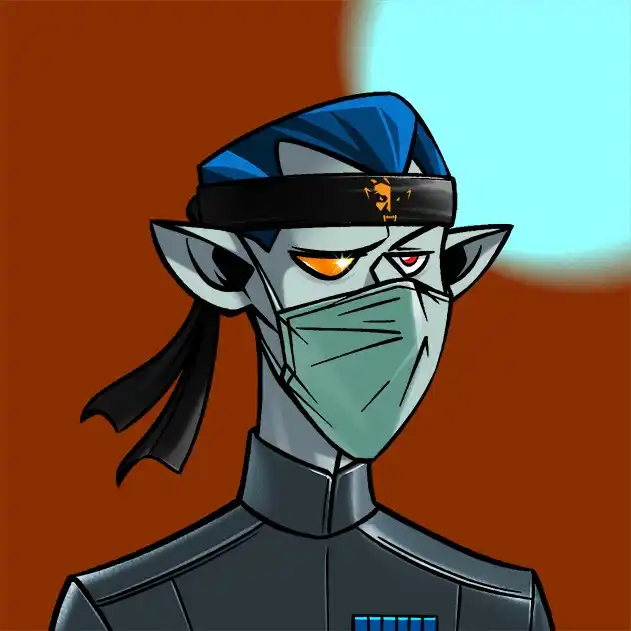
Original title: "Virtual Beings - A New Internet-Native Medium for Shared Storytelling"
Original author: Justin McAfee @1kx
Original compilation: Bi Depan@节动BlockBeats
This is a new kind of Internet-native media sharing stories, and the social experiences we share are increasingly virtual The characteristics of globalization will increase the number of Virtual beings (virtual people) in the next few decades.
Virtual humans are entities or characters that exist entirely in the digital realm, coming to us through social media interactions, shared media such as games and internet-native spaces, and holographic technology world. They not only have virtual avatars that humans manipulate and control using motion capture technology, but also AI that fully virtualizes all perception.
Therefore, virtual human encompasses multiple technological trends such as VR/AR, artificial intelligence, high-fidelity CGI art, gaming, social media, and also covers human Social psychology such as social relationships, desire for companionship, cultural animism, anthropomorphic design, etc.

And Web3 has the potential to further accelerate the emergence of these digital consciousnesses through new creator revenue models, internet-native organizational structures, and crypto-enabled digital ownership.
TL;DR
1) Definition and Brief Discussion the history and characteristics of different types of virtual humans;
2) review some of the existing technology stacks used in the creation of these virtual humans;
3) identify cryptoeconomics and Web3 technologies Areas where virtual human creation, management, and distribution could be improved;
4) Highlight existing well-known projects in the field of virtual human;
5) Speculate on AI and Web3 in the age of synthetic media The future of social experience, such as "generated media", AI generated media, personalized media;
By reviewing multiple aspects of virtual people, this This article hopes to shed light on this concept as a trend that can significantly benefit from the use of the Web3 technology stack.
Types of Avatars
There are many types of avatars with varying complexity same.
VTubers
According to Virtualhumans, VTubers are typically humans using a series of consumer-facing Virtual characters created by motion capture technology and character creation software live-stream their lives on popular video platforms such as YouTube, Twitch, Niconico and Bilibili.
Originally, VTubers originated in Japan in the mid-2010s and gradually grew into a global phenomenon by the early 2020s. By manipulating virtual avatars using real-time motion capture technology, VTubers post videos on a range of platforms to reach a fanbase drawn to the characters they create.
Back in February 2010, when visual novel maker Nitroplus started uploading content to their YouTube channel with their mascot "Super Sonico" An upcoming release is discussed. However, at the end of 2016 the phenomenon reached a tipping point: "Kizuna AI" made its debut on YouTube.

Original video link< p>
Kizuna AI created the term "Virtual YouTuber" (VTuber for short) for the first time, and has been pulled in by virtue of its affinity for answering fans' questions and comments the distance between them. Within ten months, Kizuna AI had grown her fan base to 2 million subscribers.
After the success of Kizuna AI, the VTuber trend started in Japan and gradually expanded internationally by appealing to anime and manga fans. Additionally, the dramatic increase in Twitch viewership during the COVID-19 pandemic in 2020 has further increased the familiarity of VTuber outside of Japan and led to the creation of a separate VTuber tag; and YouTube is also on its 2020 Culture and Trends Report lists it as a key trend, emphasizing the importance of the concept in By October of that year it had grown to 1.5 billion monthly views.
Today, VTubers are leveraging their ability to interact with fans, parasocial relationships, digital avatars and storytelling to create more interesting and dynamic characters than human anchors , more than 16,000 VTubers have millions of followers on social media platforms. Popular ones include Gawr Gura, Inugami Cologne, Nyanners, Ironmouse, Kiryu Coco, Code Miko and Ai Angelica etc.

VTuber image of Gawr Gura under hololive production in Japan
In Web3, NFT is also known for creating a fanatical fan base, community interaction and sense of belonging, so they have a very high fit with VTuber. At the same time, some VTubers have already begun experimenting with this technology, and Kizuna AI announced that it will stop updating from February 2022 and will spend more time to further explore the use cases of NFT.
Furthermore, the most obvious use cases for VTuber NFTs are the creation of tokens to control content and Discords, and the creation of digital collectibles. But two other, more prominent possibilities may be: "rights management" and "avatar market."
Because fully controllable and manipulable character models can be created by third parties and distributed in the form of NFT, this is an upgrade to the existing market and delegation system, the creation Owners can better track usage of their models while earning revenue from secondary sales. Anata is one such experimental project that launched Live2D with 1000 males and 1000 females VTuber avatar NFTs, these NFTs have full functionality in streaming apps.
Virtual Influencers
Virtual Influencers are created in computer graphics software digital persona and give it a personality defined by a first-person worldview, which is then accessed on media platforms for influence.

Virtual Influencer Imma
Virtual Influencers' lifestyle is portrayed on social media, with fans through various media interact and are often used by brands as the face of their products. Unlike regular celebrities, however, Virtual Influencers are CGI (Computer-generated imagery)-generated characters, so they can be anyone, do anything, and walk anywhere in the digital world. They are not physically limited, can be in two places at the same time, never tire, never fall out of script.
Among them, one of the most famous Virtual Influencers is Lil Miquela, a 19-year-old self-proclaimed robot pop star who lives in Los Angeles, has modeled for Prada, appeared in a Calvin Klein ad, interviewed at Coachella, and featured on Spotify Top the leaderboards. In 2020, Lil Miquela made roughly $12 million for her parent company, Brud.
Virtual Influencers sponsors like Lil Miquela are almost three times more likely to work with them than their peers because they are in control of who they are. And while many celebrity sponsors have paid dearly for some brands’ mistakes, that would never happen to Virtual Influencers whose entire lives are scripted.

In addition to convenience In addition to control, Virtual Influencers also provide brands with the ability to tell stories across multiple platforms and formats in a way that human counterparts cannot yet do. This is the so-called transmedia storytelling. different access points. To see how this works, see the Travis Scott music that was held in Fortnite Will.
In order to act in this game, you have to create an avatar for Travis Scott, and you know it's not actually him, just an avatar he plays in the game . Alternatively, Virtual Influencers look the same on all platforms, creating a narrative spell that wouldn't be possible with a physical-to-digital transcription of a real-life celebrity.
By far the most prominent place for brands to engage with Virtual Influencers is in fashion. Virtual Influencers often wear the latest outfits when posing on social media. Their scripted control allows them to create specific lifestyle elements and personalities for their brand. Like Lil Miquela at Prada's FW18/19 show in Milan, Shudu Gram as the digital face of Balmain models, Noonoouri as part of the "Rouge" campaign originally starring Natalie Portman, and Dior's ad It also adds a lot of color.

Currently, Major fashion houses such as Balenciaga, Alexander McQueen, Valentino, H&M, Nike, Salvatore Ferragamo have embraced Virtual Influencers to showcase their products, and Prada, is even considering creating its own in-house Virtual Influencers.
In addition, music is also a widely used field of Virtual Influencers:
- Yameii Online's track "Baby My Phone" inspired multiple Tik-Tok co-production trends and mashups, reaching millions of views across hundreds of thousands of videos;
- Kai, a 16-year-old Roblox Virtual Influencer best known for creating the game Splash (which recently raised over $20 million from investors), performed over 100,000 fans simultaneously at 7 different Roblox venues 48 hours;
- K/DA, virtual K-Pop girl group created by Riot Games to promote new in-game characters, scores 5.08 on Youtube with viral music video and song "Pop/Stars" 100 million views;
- FN Meka raps on social media while showing off ultra-rare merchandise like a Starbucks-branded PS5 and AR sneakers.
Recently, the culture of Virtual Influencers has begun to further integrate with Web3: Dapper Labs acquired Brud, the studio behind Lil Miquela, and several Virtual Influencers launched NFT , including Lil Miquela, LV4, Rae, Shudu, FNMeka and < a href="https://opensea.io/assets/0x48dbbc8f3be12a16f94e88f4e9be06915c419296/5" target="_blank" rel="noopener noreferrer">Yameii, and major Web3 studios like RTFKT are promoted in partnership with Virtual Influencers Their NFTs.
In the future, the integration of Web3 and Virtual Influencers will be even more exciting, such as being used in activities or advertisements, and Virtual Influencers will be decentralized Forms curate their stories through the DAO, as well as receive distributions that flow to the community treasury.
Distributed roles
Distributed roles are managed by an open and permissionless community A digital character that fans use to create music, animation, videos, lore, and more. Distributed actors may be autonomous in some form, such as AI artists, but are ultimately governed by the community. So it's not like Virtual Influencers, it's not managed by having an authority or a dedicated studio.
Currently, one of the best examples of distributed characters is "Hatsune Miku", a Japanese Vocaloid software voice library released by Crypton Future Media in 2007 , Vocaloid allows users to synthesize singing voices by inputting lyrics and melodies. Because each Vocaloid has its own characteristics and is actually an independent "singer", they are usually released as "Moe anthropomorphism" (cute anthropomorphic) characters, and the most successful of these is Hatsune Miku.

Initially, Hatsune Miku is released under the "No Remix" license. Since her debut, she has appeared in hundreds of thousands of songs and music videos made by creators and fans from all over the world. And the freeware program MikuMikuDance spawned a boom in user-generated animation, even in live holographic performances attended by fans around the world, while the distributed nature of Hatsune Miku and her core remix culture prompted Crypton to adopt a non-commercial Creative Commons Attribution License.
On the other hand, Hatsune Miku is a very successful distributed software that has a decentralized community of creators to create new songs for virtual humans and animation, and grossed more than $120 million in music, merchandise, holographic concerts, and shareable media in its first five years alone. So this model is a perfect fit for DAOs — human creators publish new music and dances, vote on content, and collect revenue into a community-owned treasury, and some distributed actors have already started experimenting with the idea.
And because of the creative AI's ability to create infinite new works, human curation may play an important role in the new economy. DAOs that benefit from value creation by managing the curation, distribution, promotion, and governance of distributed characters may usher in a new era of AI or human-generated digital character crafting.
Autonomous entities
Autonomous entities are created by simulating AI in machines that are programmed To think like humans and mimic their behavior, it can also be applied to any machine that exhibits characteristics associated with human thinking, such as learning and problem solving.
While the aforementioned three types of avatars are widely controlled by humans in one way or another, however, this is not the end of avatars type. Autonomous entities will use artificial intelligence and other tools to simulate life, including chatbots, NPCs in virtual worlds, and types such as artificial intelligence companions and digital reincarnation.
AI Companion
Easiest Autonomy One of the physical forms is the AI companion, and the rising trust and acceptance of artificial intelligence among the younger generation seems to herald a future of close connection between humans and artificial intelligence entities. The entire business model formed around this idea, with companies like Replika offering friendly chatbots, interacting with their humans throughout the day; Hybri provides custom 3D modeled robots to Simulate romantic companionship.
Currently, the growth of the AI companion market is already evident: Xiaoice, which was spun off from Microsoft, was recently valued at $100 million, against the backdrop of the autism epidemic (61% of adults surveyed see a significant increase in loneliness), and the conversational AI market is expected to grow to $1.39 billion by 2024.

Source: KPMG
And a project in Web3 that focuses on AI companions is Petaverse Network, which draws on a long tradition of virtual pets from Tamagotchi to Nintendogs. Petaverse Network seeks to create an interoperable digital standard for virtual pets, publishing their personalities on-chain so they can live forever. This personality represents the pet's data layer, which is updated over time as users interact with it in games, AR, and VR. And other projects will also be able to build on top of this data layer, reinterpreting pets for their own virtual worlds and games.
Digital Reincarnation
Further Expand AI Companion relationship, artificial intelligence can be trained on the digital footprints of individuals to replicate their behavior after their death, the so-called digital reincarnation. With enough text messages, social media posts, and videos as training data, a neural network can Learn to simulate the speech and mannerisms of the dead, while presenting yourself as a realistic CGI model or chatbot.
Recently, it was reported that Joshua Barbeau used software to create A surreal GPT-3-powered chatbot trained on her late fiancé's text messages to recreate the experience of talking to her.But due to the sensitivity of digital reincarnation, permissions management is critical and requires Encrypted NFTs that are staked to access may be the best solution to ensure that these digital copies are not used elsewhere on the internet.

Source: "San Francisco Chronicle"
However, autonomous entities are not limited to AI companions or digital reincarnations, but can also be agents of virtual worlds. An obvious problem with many of the virtual worlds we explore today is that there will still be Feeling empty, then populating virtual worlds with highly intelligent NPCs would be one way to bring these environments to life. Imagine the following scenario:
- Decentral Games The virtual casino is equipped with a highly intelligent chatbot;
- Browse the Cryptovoxels store that sells digital goods 24/7 and has an AI NPC inhabited by it;
- Use a distinctive personality
- on-chain creatures that use oracle data feedback and adapt to external variables; based on user behavior in multiple games,
- use random Game characters that evolve morally over time.
So the possibilities of a virtual human with artificial intelligence in the digital realm will be endless.
Virtual human technology stack
Virtual human is generally based on the following various technologies and creative infrastructure run and operate on.
AI
Virtual humans vary in degree of autonomy, from fully controlled by humans ( Such as Vtuber, most Virtual Influencers), to by natural language processing (NLP), computer vision and for memory storage, emotion, motivation, etc. Some of the most common tools in this field are OpenAI's GPT-3, a large language model that is highly accurate at describing conversations with actual entities, or machine learning algorithms that learn how to to update the underlying dataset.
While many of today's autonomous virtual humans run on centralized AI infrastructure, two prominent projects in Web3 take a different approach Rebuild AI on the chain.
Alethea AI, the first project based on the "iNFT standard", was sold at Sotheby's last year $478,800 Alice is out. The iNFT hashes the GPT-3 personality hint into the NFT's metadata, which is subsequently decrypted on the Noah's Ark platform and used to generate a GPT-3 response to user input. These iNFTs can be trained through multiple interactions with the user, progressing in different levels of intelligence over time. So users can create iNFT versions of their favorite digital assets by pairing any NFT with a personality pod and training it with a combination of user interaction and $ALI token staking.
The first proof of concept for ASM was AIFA, an AI football game that uses a combination of Unity, IPFS, and the example Training Gym. However, ASM hopes to expand the application of its agents beyond, and it has proposed some conceptual ideas including DeFi transaction agents, game role agents, chatbots and digital assistants.
So the design space for on-chain AI agent creation remains largely unexplored, and it will be exciting to see how this area develops. Importantly, the shift from proof-of-work to proof-of-stake means that large numbers of GPUs will find alternative uses, so decentralized AI models using GPUs for mining may also be the next frontier.
3D Modeling and Animation
At the heart of all iterations of virtual humans is the use of 3D modeling , animation or motion capture technology. While virtual humans come in a variety of graphic aesthetics and forms, all require basic models to be assembled for animation or movement, markets and repositories for these models already existand NFTs could provide additional avenues for their financialization< /b>.
Today, the most commonly used applications in modeling and animation of avatars and VTubers include Unity, Unreal Engine, Blender, iClone and FaceRig etc.
While some avatars don't try to look photo-realistic, the ones that do require a lot of work, the designer often struggles to overcome Uncanny valley (uncanny valley), which is humans looking at imperfectly rendered faces the innate sense of unease and revulsion that one feels at times. But the popularity of the uncanny valley effect may diminish over time as a new generation becomes more accustomed to interacting with CGI and humanoid robots, though for now, rendering of humanoid characters must account for this physical aversion.

realistic rendering The key limitations are determined by the computer processing power, such as rendering of high-fidelity faces with sufficient detail and deformation control, as well as mesh 3D models with texture images and specular maps, all of which are intensive.
While clothing models are similarly dense, mainly due to subsurface scattering (e.g. silk reflects light differently than cotton) leading to problems in CGI and game studios as well as in the fashion industry There is a strong demand for computer-aided clothing design. Artisant, which specializes in NFT mockups and digital design, and The Fabricant, The Dematerialized, DIGITALAX, Tribute Brand and RTFKT and other digital fashion companies will further capture market share in the virtual space if they continue to adopt Web3 technology. And with the increasing popularity of virtual characters, digital fashion may also grow in tandem.
Additionally, the difficulty of creating avatars will help create a vibrant market for 3D models, with creators selling the rights to their models to , games, movies, etc. who use them. And Web3 is here to unlock additional opportunities: NFT 3D models that can be resold, secondary sale fees go back to the original creator, ultra-smooth payment flow can control the model while using it in the virtual world, through encryption File permissions are controlled, and must be pledged to unlock, etc..
For animation, the 3D mesh will be bound to the skeleton, which can then be animated through code or user action. At present, experiments combining animation and gestures with NFT have begun, and HEAT represents this at the forefront of a movement that hopes to create a market for animations that can be applied to 3D models. By retargeting .glb and .gltf files to the skeletal structure of the 3D model, HEAT will be able to create interoperable motion files for any standardized avatar file in the virtual world.
Virtual Human Studio
The size of the team required to build a virtual human is largely depends on its complexity. Anyone can use VRoid Studio, FaceRig and streaming setup to create a simple VTuber character, but Virtual Influencers or autonomous entities may require AI, animation, Expertise in speech synthesis, modeling, content creation, and more.
Virtual human studios typically have staff dedicated to CGI art, photography, animators, storytellers, social media planners, fashion strategy, business development, PR, Financial management, product marketing and other aspects of the team. These studios can focus on the management of a single character, or they can focus on creating a large number of characters. For example, The Diigitals Agency behind Shudu Gram manages a total of 7 Virtual Influencers; Lu of Magalu is supported by one of the largest e-commerce businesses in Brazil; SuperPlastic manages Janky & Guggimon, Dayzee & Staxx, Kranky, ShuDog, etc. .
While DAOs are very effective as a means of organizing content and creating fan experiences, over time, the entire decentralized virtual human Chambers will be formed, either as DAOs that manage individual and collective roles, or as service DAOs for those looking to integrate virtual humans into their projects.
It is worth mentioning that CULTUR DAO is the most famous decentralized virtual human studio, calling itself Web3 Pixar. By controlling Discord and content with tokens, a group of artists, technologists, and evangelists use shared economic incentives to drive innovation in the space. Meanwhile, committees were formed around avatars, AI, speech synthesis, story creation, and experimentation with existing AI NFT infrastructure.
Recently, their hackathon has also produced many interesting projects, including Decentraland AI Chatbots, virtual human ballet, talking Cryptopunks, AI character memory test and A virtual cat Kittygotchi similar to an electronic pet.
Synthetic Social Media
Synthetic media is AI-generated personalized media content that is proliferating, and virtual humans are a further extension of this social media layer . While virtual humans may still feel alien right now, it's not hard to imagine that in a generation or two they will become commonplace and widely accepted by society.
Currently, Deepfake, social media robots and anthropomorphic smart devices have blurred the line between human and virtual, and with the younger generation Interacting with virtual humans more frequently will only continue to evolve. Statistics show that almost 15% of Virtual Influencers' audience is young people between the ages of 13 and 17, which is double the average for regular influencers.
So the initial stage of this virtual human synthetic social media has arrived, as news of marriage between human and virtual human, Hybri and other dating apps, dedicated virtual companion platform, and Virtual Influencers with more influence than humans, our growing trust in artificial intelligence, etc.

And Web3 technologies will provide additional access points for the creation and management of these synthetic social media experiences. Things like NFT-backed ownership layers, decentralized governance with myriad stakeholders across the internet, revenue models not possible in previous iterations of the network, blockchain persistence, and more will open up new frontiers for synthetic social media. Encryption, decentralized internet organization, and virtual worlds are thus the basis for building a new social layer of synthetic media reality.
Welcome to join the official BlockBeats community:
Telegram Subscription Group: https://t.me/theblockbeats
Telegram Discussion Group: https://t.me/BlockBeats_App
Official Twitter Account: https://twitter.com/BlockBeatsAsia

 Related Articles